
8 Acoustic Guitar Love Songs Every Player Should Know
You're tuning up in the corner of a wedding reception, or waiting for your name at an open mic, with no band behind you and a room that isn't quite listening yet. That's the test for acoustic guitar love songs. One guitar has to set the tempo, carry the harmony, and leave enough space for a vocal to sound close rather than exposed.
The format got a mainstream reset when MTV aired Clapton Unplugged on August 25, 1992, with Clapton playing a 1939 Martin 000-42, a broadcast credited by Acoustic Guitar magazine's history of the dreadnought with reviving interest in smaller-bodied 000 and OM instruments. You don't need that guitar. You need songs whose parts still work when they're stripped to strings, fingers, and one voice.
The eight below are judged from the player's chair. Some reward steady fingerpicking, some live or die on strumming feel, and some are harder to sing than they look on a chord chart. If you're choosing artwork for a rehearsal room or a gift for a musical partner, it also helps to understand formats before you buy, as covered in limited edition prints explained by Striped Circle. Start with the arrangement you can finish confidently tonight.
1. Thinking Out Loud
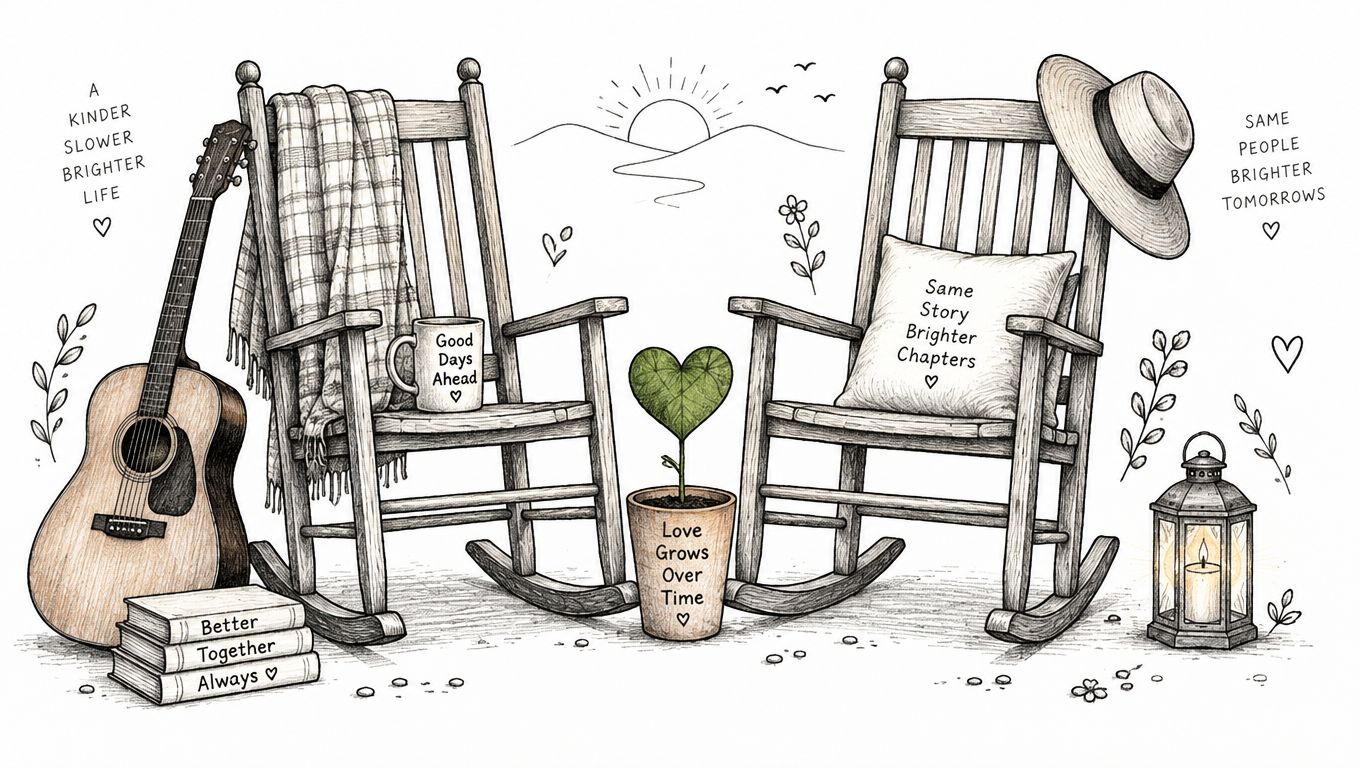
The image below captures exactly where this song lands best, at home, unhurried, and built for two people rather than a stage.
From Ed Sheeran's album x (2014), co-written with Amy Wadge, this ballad about growing old together won major Grammy Awards, including Song of the Year. Its appeal for solo players is the warm, rhythmic guitar groove under a melody that doesn't demand a huge range. Wedding bands and acoustic cover artists keep it in rotation because couples recognize it within seconds.
What Your Hands Have to Do
Don't rush the picking pattern into a generic strum. The song needs a steady pulse that feels like a slow dance, with bass notes landing cleanly before the upper strings fill in. Practice it slowly with a metronome before you add vocals, and use a capo if the original key sits awkwardly for your voice.
If you're learning by ear, start by checking the harmony against a guide to find the chords to a song, then isolate the guitar from a legally obtained recording. With Isolate Audio, you describe the sound in plain English, such as "acoustic guitar", and study the isolated part against the remainder. That exposes the little pushes and muting that chord sheets flatten out.
Watch how the official performance keeps the groove relaxed rather than metronomic before you set your own tempo.
For a first dance, I recommend fingerpicking the verses and opening into light strums only at the final chorus. You'll keep the intimacy couples want without turning the ending into a singalong.
2. Make You Feel My Love
Bob Dylan wrote and recorded this for Time Out of Mind (1997), then Adele's cover on 19 (2008) carried it to a much wider audience. It's now a fixture in film, television, and wedding playlists, but that familiarity creates a trap. Players often overplay it.
The guitar part is simple acoustic accompaniment, and that's the point. Your job is dynamic control. Keep verses quiet, let chord changes breathe, and resist adding fills every time the vocal pauses. In a small room, restraint sounds more romantic than virtuosity.
Record It Close and Quiet
A close microphone suits this material, but placement matters. The guitar's air resonance is commonly around 100 Hz, and aiming directly at the soundhole can exaggerate low frequencies, a problem explained in Recording Guidebook's home guitar recording guide, which favors the neck-body junction for balance. That guide also recommends 44.1 or 48 kHz at 24-bit, with 48 kHz preferred for video.
- Study the phrasing: Isolate a "lead vocal" from Dylan's or Adele's version and mark where each singer breathes.
- Match your dynamics: Play softer under held notes, then lift slightly between lines.
- Check the remainder: Listen for finger noise and room sound you've accidentally emphasized.
If the audience can hear your strumming hand working harder than the singer, you're playing too loud for this song.
Use it for a ceremony interlude or a quiet dedication, not as an upbeat reception opener. It asks the room to lean in, so program it when people are already seated.
3. Maybe I'm Amazed
Paul McCartney released this tribute to his wife Linda on his debut solo album McCartney (1970). Singer-songwriters return to it because the rich chord changes give an acoustic player more harmonic movement than a standard three-chord ballad. McCartney has performed it live as a solo acoustic piece, which proves the song doesn't need a full band to land.
The difficulty isn't speed. It's coordination. The vocal line pushes and pulls against the chords, and the emotional peaks arrive where your left hand is also busy changing voicings. Learn those chord voicings first, without singing, until you can move between them without looking down.
Adapt the Key Before You Rehearse the Vocal
Transpose early with a capo rather than straining to copy McCartney's range. Then separate the vocal from a live version and listen to how he phrases across bar lines instead of landing squarely on every beat. That looseness is what keeps the performance from sounding like a piano song forced onto guitar.
- Verse approach: Use broken chords or soft fingerpicking so the lyric stays conversational.
- Chorus approach: Strum fuller voicings, but mute between hits to preserve lift.
- Ending approach: Return to single notes or arpeggios so the last line feels personal.
This works best for an anniversary set or a listening-room open mic where the audience knows McCartney's catalog. I wouldn't choose it as a beginner's first wedding request. The changes are playable, but singing them convincingly while you play is the exam.
4. Better Together
Jack Johnson's “Better Together,” from In Between Dreams (2005), brings an easygoing acoustic groove to a set. Its lyric focuses on ordinary shared life, making it a natural fit for outdoor ceremonies, beach playlists, and relaxed receptions. At a solo performance, the guitar carries both the pulse and the warmth, so a steady feel matters more than a busy arrangement.

The relaxed mood still depends on control. Keep a consistent right-hand pattern, using muted strokes and small accents to give the groove shape. Rush, and the song feels anxious; drag, and its lift fades. Players often focus on the chord changes first, but the even motion of the strumming hand is what makes a solo arrangement hold together.
Acoustic and ukulele versions work because the harmony is forgiving and the melody suits many voices. When building a practice track, describe the part by texture, such as “strummed guitar under the chorus,” rather than relying on a genre label. A plain-English description makes it easier to focus on the sound you want to isolate.
Keep the Groove Interesting
Give the verses and choruses distinct textures. Fingerpick or lightly brush the verse, then add percussive mutes in the chorus for contrast. You can describe the target part as “acoustic guitar” to create a focused rehearsal loop. Once the right hand holds tempo without attention, sing over the remaining parts and check that the vocal still feels relaxed.
For a garden-party set, place the song after a slower ballad. Its gentle pulse raises the energy without pushing the room toward dancing.
5. I'm Yours
Jason Mraz made this the lead single from We Sing. We Dance. We Steal Things. (2008), and its bright acoustic strum turned it into an international hit used across advertising, film, and television. Buskers love it because the hook is instant. Audiences know when to join in.
The challenge is rhythmic stamina. You need a steady, lively strum while delivering a playful vocal that sits slightly around the beat. Learn the guitar pattern until it's automatic, then speak the lyric in rhythm before you try to sing full voice. That sequence saves you from simplifying both parts into mush.
Build the Engine First
Isolate "acoustic guitar strumming" from the recording and copy the accents, not just the chord order. Pay attention to which strokes are full, which are clipped, and where the hand lifts off the strings. Those details create the bounce.
Practical rule: If you can't hold the strum pattern while counting out loud, you aren't ready to add Mraz's syncopated vocal yet.
The demand for this kind of portable, guitar-led performance tracks with the instrument's reach. U.S. acoustic-guitar sales increased by 10% in 2014, while retail value rose 12.4%, figures attributed to the NAMM Global Report in The Tennessean's reporting on the guitar market. More guitars in homes means more listeners recognize when a strum feels right.
Add a shaker only if someone else can play it steadily. For solo busking, clean guitar and a confident vocal beat extra percussion every time.
6. Yesterday
Released on the Beatles' Help! (1965) and credited to Lennon-McCartney, this ballad features McCartney on lead vocal and acoustic guitar with a string quartet. Its lyric about lost love makes it different from the celebration songs here. Play it as reflection, not as a first-dance anthem.
The still-life below fits its bookish, autumnal mood and its life in solo acoustic sets and tribute shows.

It's one of the most covered songs in recording history, so listeners know the melody well enough to notice rushed phrasing. Slow down. Learn the melody on the guitar's higher strings as well as singing it, because that helps you place chord changes under the line rather than chasing them.
Separate Guitar From Strings for Study
Isolate "acoustic guitar" from the quartet to hear McCartney's accompaniment without the sustained strings masking transitions. Then build a loop using the approach in this guide to a backing track for guitar practice and rehearse one phrase at a time. Use a capo or simple retuning if the key doesn't suit your voice, but keep the tempo spacious.
For a quiet interlude, state the melody once plainly, then add light bass movement underneath. Don't decorate every bar. The tune's strength is its directness, and over-arranging makes it sound like you're avoiding the lyric's sadness.
7. Wild Horses
The Rolling Stones released this Mick Jagger and Keith Richards ballad on Sticky Fingers (1971). Richards' acoustic guitar gives it a country-tinged, folk-rock character, while the lyric balances devotion with the pain of separation. Country and rock acts have covered it for decades, and the Stones still perform it live.
From the player's chair, feel beats precision. A rigid, evenly accented strum makes the song sound smaller than it is. Aim for a relaxed, loose attack, with chord changes that breathe and occasional bass movement between shapes. Let some strings ring longer than a tidy recording would.
Find the Folk-Rock Voicing
Experiment with open tunings if standard tuning sounds too clean for your arrangement, but don't change tuning onstage unless you've rehearsed the vocal key that results. A better first step is to study the original part closely using a method to isolate guitar from a song, prompting for "acoustic guitar" and comparing the isolated stem with the remainder.
- Opening: Pick individual strings so the first vocal line enters over space.
- Middle verses: Add loose strums and hammer-on movement inside familiar shapes.
- Final chorus: Widen the strum, but keep the tempo behind the beat.
Use this for a late-evening acoustic set when the audience is ready for something weathered rather than sweet. I recommend it for intermediate players who can change chords cleanly but still need to work on feel. It teaches restraint better than faster material does.
8. Hey There Delilah
Plain White T's released this long-distance love song on All That We Needed (2006), and it became a major pop hit and a durable acoustic cover. The premise is specific, two people separated by distance, which is why it works for dedications that generic romance doesn't quite fit.
That distance is the visual idea in the artwork below, with music doing the connecting.

For solo performance, simplify any full-band thinking into a clean acoustic pattern you can sustain while telling the story. The picking should stay melodic and even, because the vocal carries names, places, and conversational details. If your right hand speeds up under the longer lines, the whole song starts to feel breathless.
Choose the Version That Fits the Moment
Context matters more than a generic romantic label. Recent catalogs package material as "chill," "Spanish," "relaxing," and "soft" guitar, including 2025 mood-specific releases such as Sunset Promises on Apple Music. Treat this song the same way. It's bittersweet and yearning, not celebratory.
Separate "lead guitar" or "acoustic guitar" from the mix to learn the riffs, then use a capo to place the key where you can sing the verses without pushing. Wedding and cover bands play it often, and it's a karaoke favorite, but I think its best use is a private dedication or long-distance anniversary video. There, the lyric's situation does the emotional work for you.
How the eight acoustic guitar love songs compare for players
| Item | Year | Artist | Key Acoustic Feature |
|---|---|---|---|
| Thinking Out Loud | 2014 | Ed Sheeran | Steady, rolling fingerpicked guitar groove |
| Make You Feel My Love | 1997 | Bob Dylan (original); Adele (cover) | Sparse, intimate acoustic accompaniment |
| Maybe I'm Amazed | 1970 | Paul McCartney | Rich melodic chord changes, often adapted for solo acoustic guitar |
| Better Together | 2005 | Jack Johnson | Relaxed strumming and fingerpicking |
| I'm Yours | 2008 | Jason Mraz | Bright acoustic strumming with a reggae-tinged groove |
| Yesterday | 1965 | The Beatles (Paul McCartney) | Flowing acoustic guitar paired with a string quartet |
| Wild Horses | 1971 | The Rolling Stones | Country-tinged acoustic guitar with a loose, emotive feel |
| Hey There Delilah | 2006 | Plain White T's | Melodic guitar riff and strumming, adaptable for solo acoustic performance |
Build a Playlist and Practice Plan That Lasts
Pick one song to learn this month based on the job you have. If you're playing a wedding, start with Thinking Out Loud for a first dance or Make You Feel My Love for a seated ceremony moment. If you're building an open-mic set, choose Better Together or I'm Yours to lift a room, then use Yesterday or Wild Horses when you want the tone to turn reflective.
Be honest about minimum viable skill. Guidance for new players suggests many beginners can play simple songs within one to three months, while smoothly changing open chords generally takes three to six months with regular practice, timelines set out in Beginner Guitar Guide's acoustic learning guide. The same guide cites industry research estimating that roughly 90% of new guitarists quit within their first year. A simple song you can perform confidently is worth more than a famous ballad that makes you stop playing.
Sequence the Eight Songs by Energy and Technique
Group them so your hands and voice get variety. Open with fingerpicked ballads, move into mid-tempo grooves, and save the most familiar upbeat strummer for when the audience is warmed up.
- Intimate opening: Make You Feel My Love, Yesterday, Hey There Delilah.
- Warm middle: Thinking Out Loud, Maybe I'm Amazed, Wild Horses.
- Lift at the end: Better Together, I'm Yours.
That order won't suit every event. A proposal party may need the upbeat songs earlier, while a private dedication may need only one quiet piece played well. Match emotional intent, vocal range, and setting before you worry about playing all eight.
Your next step is concrete. Choose one arrangement, upload the highest-quality legally obtained recording you have, and isolate a specific target such as "acoustic guitar only" or "lead vocal". Practice the guitar part at a slow tempo for a week, listen to both the isolated stem and the remainder for artifacts or missed details, and add vocals only when the chord changes no longer need your full attention. That's how acoustic guitar love songs become repertoire instead of a list you keep meaning to learn.
Ready to hear exactly what the guitar is doing under the vocal? Use Isolate Audio to upload a legally obtained recording, describe the part in plain English, such as "acoustic guitar" or "lead vocal", and download the isolated stem and remainder for focused practice. Pick one song from this list tonight, slow it down, and build your arrangement one clean phrase at a time.