
7 Songs for Basses: Low-Voice Picks for 2026
You've found a low note that feels surprisingly easy. Then you try a song by a famous deep-voiced singer, and the chorus leaves you reaching, the long phrases run out of air, or your bottom notes disappear beneath the accompaniment. Finding your low range is exciting, but it doesn't automatically tell you what to sing.
Opera, oratorio, musical theatre, folk, and soul all offer songs for basses that develop more than depth. The useful question is what you can learn from each piece: connected vowels, clear storytelling, rhythmic precision, or a comfortable transition into your upper register.
Don't choose by the lowest note alone. The Stars & Catz repertoire guide highlights the importance of comfortable tessitura and passaggio, not range extremes. Choose a manageable phrase, make a practice track, and listen for an even tone rather than the darkest possible sound.
1. Ol' Man River
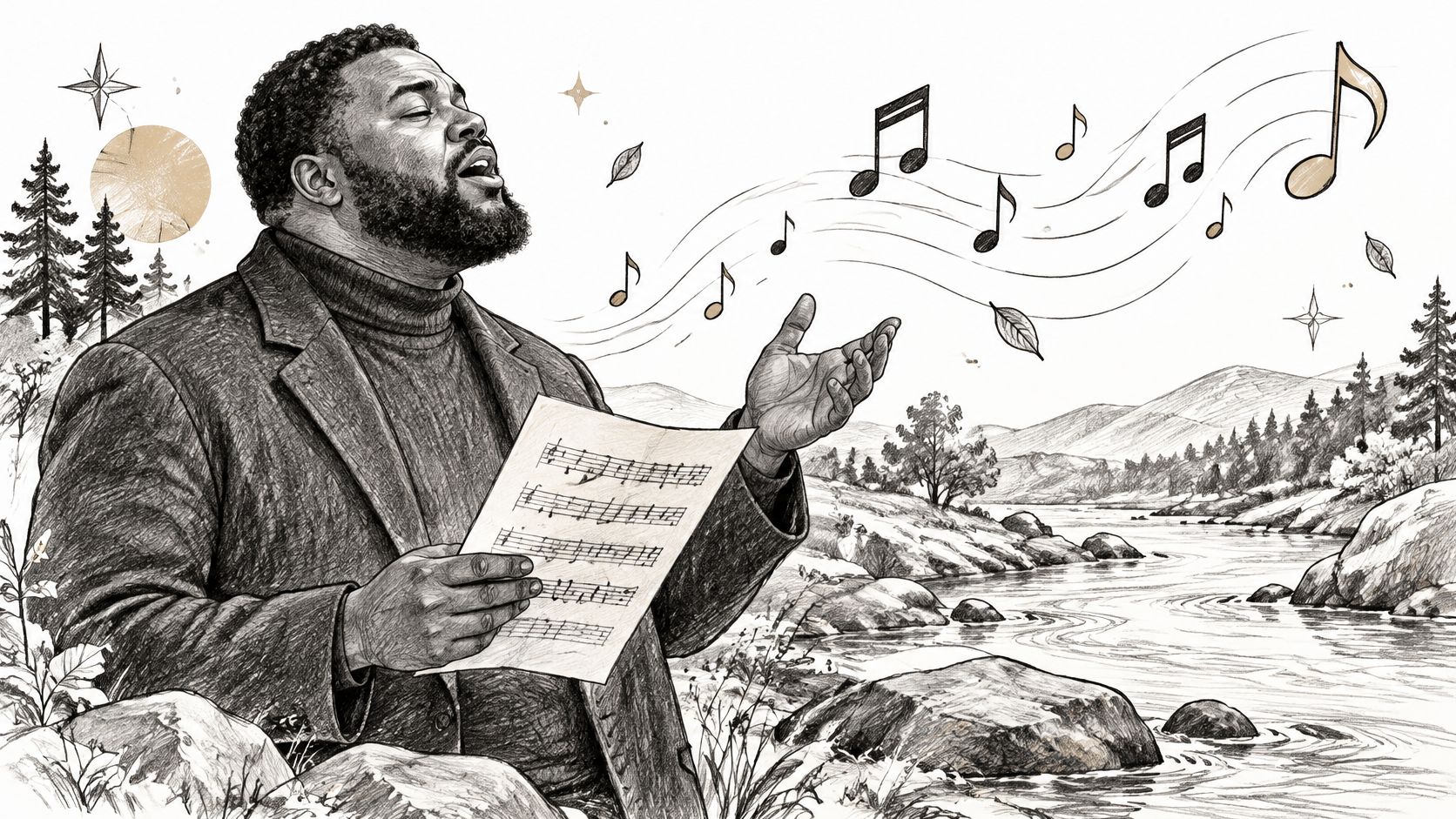
A slow melody can expose more than a fast one. In Ol' Man River, from Show Boat, you can't hide a fading vowel or an unplanned breath behind busy accompaniment.
This is a legato exercise with a story attached. The challenge is keeping the tone connected while the text remains understandable. Artificially darkening every vowel may sound impressive briefly, but it makes the line heavier and the upper phrases harder.
Keep the vowel moving
Choose a short phrase and sing its melody on a comfortable vowel before restoring the words. Keep your jaw loose as you descend, and don't press your chin toward your chest to manufacture depth. Use bass scales for beginners to check whether the same easy coordination survives outside the song.
For a concert or cabaret arrangement, choose the key by the whole phrase, not its final low note. If the bottom becomes breathy or indistinct, raising the key may help more than lowering it.
Build your practice track from a recording you're permitted to use. Describe the target as piano accompaniment if it's a piano-led version, or lead male singing voice if you want the vocal removed. Audition the remainder before rehearsing: a track with missing piano attacks can make your entrances unreliable.
2. Ella giammai m'amò (Philip's Aria from Don Carlo)
This isn't a beginner's reward for discovering a low register. Philip's aria demands sustained singing, exposed entrances, and expressive control without constant vocal pressure.
Use it to train vowel consistency under dramatic intensity. Philip's distress should emerge through the text and phrasing, not through a deliberately constricted throat. A singer who can produce the notes separately may still struggle to sustain the aria's vocal workload.
Emotional weight doesn't require physical heaviness. Keep the voice responsive enough to change color.
Separate language from intensity
Start with a translation and speak the Italian rhythmically. Then sing a manageable passage softly enough that you can hear whether the vowels change unintentionally as the melody rises. Restore dramatic intensity only after the phrase stays coordinated.
For example, if an expressive entrance consistently sounds pushed, practice the approach and entrance together rather than repeating the exposed note alone. A teacher can help distinguish a registration problem from an unsuitable key or premature repertoire choice.
For focused listening, extract the solo bass voice from an authorized recording. Compare its consonant timing with the score, but don't copy another singer's vibrato or breath lengths automatically.
A separate cello extraction can clarify the musical dialogue. It isn't a complete backing track, though. For singing practice, use the vocal-removal remainder only if the orchestral cues remain intact; otherwise, choose a piano reduction.
3. O Isis und Osiris (Sarastro's Aria from The Magic Flute)
Calm authority is harder than sounding dark alone. Sarastro's prayer asks you to sustain a poised line without letting solemnity become slow, effortful singing.
Sarastro appears among Andrea Mastroni's recurring roles in his Operabase performance record, making the role a useful professional repertoire reference. For a developing singer, however, a short passage can be a more productive assignment than the complete aria.

Train steadiness without rigidity
The principal difficulty is maintaining clear pitch and flowing vowels through slow, exposed phrases. German consonants must remain intelligible without repeatedly interrupting the sound.
- Establish the pulse. Speak the text with a metronome before singing, especially where solemn delivery tempts you to drag.
- Plan the release. Decide where the vowel ends and the final consonant lands.
- Check the descent. Record a descending phrase and listen for a sudden loss of clarity rather than judging only its depth.
For a lesson assignment, alternate a sung phrase with the same rhythm spoken naturally. That comparison helps reveal whether your singing has become unnecessarily ponderous.
Extract the solo bass singing voice for reference listening, then use the remainder as accompaniment if it retains the orchestral detail. Requesting orchestral strings instead gives you a listening study, not necessarily a usable backing track. Check the score for entrances that depend on other instruments.
4. Boris's Monologue from Boris Godunov
Start with the words, not the voice color. Boris's monologue depends on the relationship between speech-like declamation and sustained singing, so an impressive rumble won't compensate for unclear thought.
The skill is changing delivery without losing vocal coordination. The difficulty sits where urgent speech expands into a lyrical phrase. Singers often push those transitions, then have little freedom left for the next change of mood.
Give each thought a destination
Work with a Russian-language coach before settling pronunciation into muscle memory. Mark the important word in each thought and choose breaths that support the meaning, rather than breathing whenever the throat feels crowded.
Say you're preparing a dramatic audition excerpt. Speak it at conversational intensity, speak it in rhythm, then sing it while preserving the same verbal priorities. Keep the surrounding measures in your practice loop so the emotional transition doesn't become an isolated effect.
Practice boundary: Portray panic without reproducing the physical tension of panic.
For source separation, request solo low male singing voice rather than bass, which could also describe an instrument. Historic recordings may contain noise, restricted frequency detail, and orchestral overlap that extraction can't fully resolve.
Compare the isolated voice with the original before trusting a consonant or pitch detail. If processing smears a syllable, return to the score and a clearer language reference. Use the orchestral remainder for rehearsal only when the entrances and tempo changes remain audible.
5. The Trumpet Shall Sound (from Handel's Messiah)
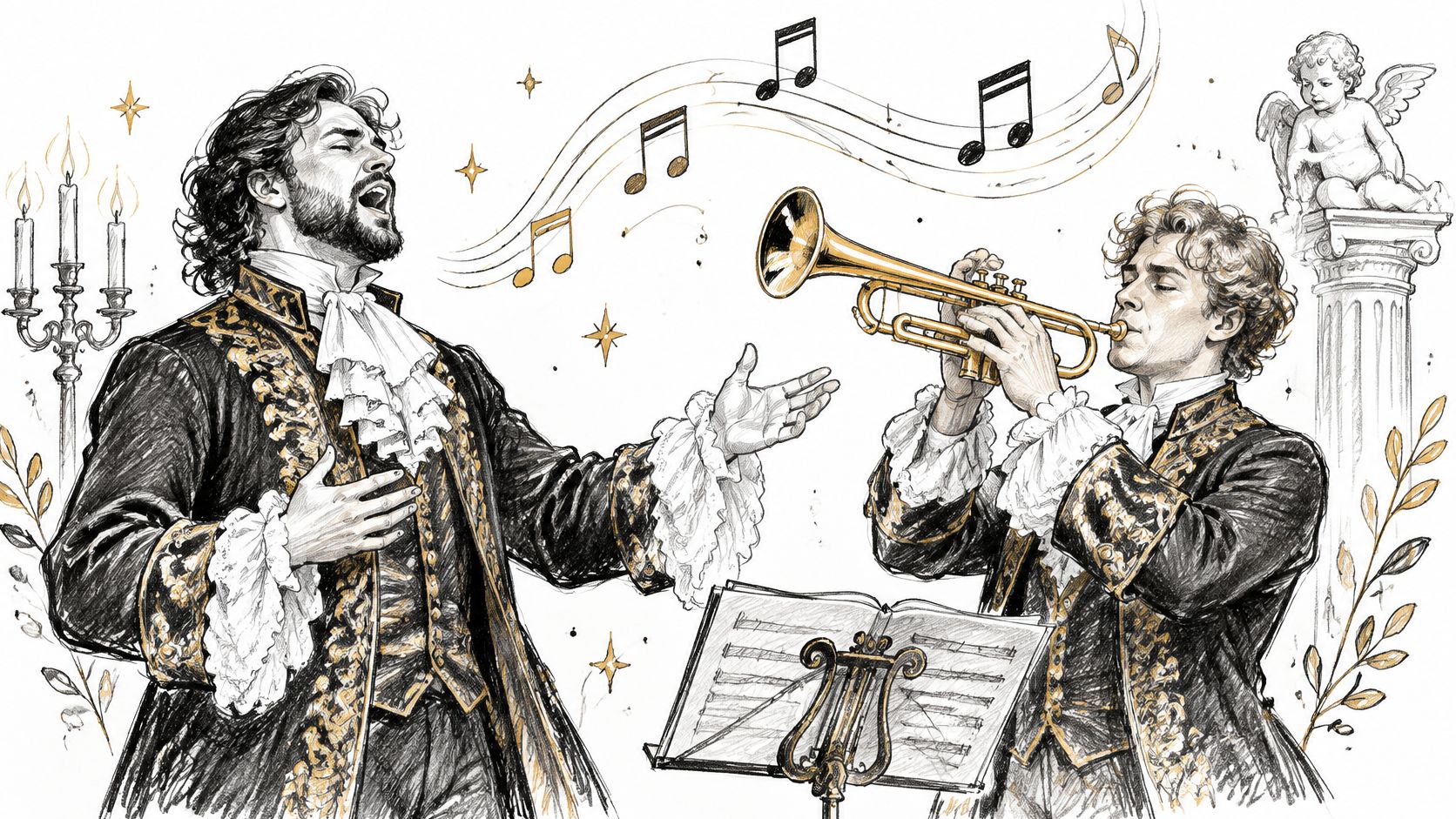
If slow arias encourage you to sit heavily on your voice, this is a useful corrective. The bass and trumpet writing calls for buoyancy, clear articulation, and enough rhythmic discipline to keep the ensemble together.
The pairing is worth hearing before you practice.
Keep agility separate from force
Practice moving passages slowly on a vowel, keeping each pitch distinct without adding a fresh shove of breath. Then restore the text and check that consonants clarify the rhythm rather than stiffen your tongue.
For an oratorio audition, rehearse the musical lead-in as carefully as your entrance. If bass-clef reading slows you down, the note-location explanations in how to read music notes for bass guitar can help, but use your vocal score for the actual pitches and rhythms.
Listen for how the vocal entrance relates to the trumpet phrase.
Extract the trumpet obbligato from an authorized recording to study its articulation and breathing shape. Then remove the solo bass voice from the full mix to create a rehearsal remainder.
Don't mistake the trumpet stem for complete accompaniment. You still need the underlying pulse and harmony, particularly across rests. If vocal removal also damages the orchestral bass line, a piano rehearsal track will serve you better.
6. Sixteen Tons
You don't need an operatic sound to make a low voice compelling. Sixteen Tons works through rhythmic confidence, verbal character, and the contrast between speech-like delivery and sustained pitch.
Use it to train consonants inside a groove. The common difficulty isn't reaching the bottom. It's keeping the story clear without making every word equally heavy.

Speak first, then add pitch
For a folk set or informal performance, speak the verse over a steady pulse before singing it. Mark the words that carry the narrative, then let the connecting words stay lighter. Don't imitate a recorded singer's gravel if your comfortable voice is cleaner.
- Find the pocket. Record yourself with a metronome and check whether consonants repeatedly arrive late.
- Keep pitch available. Move from spoken rhythm into singing without forcing the sound lower.
- Test intelligibility. Listen carefully; the words should survive without turning up the playback.
Create a reference stem by targeting the lead male vocal. Listen for where speech becomes sustained singing, then rehearse without that reference so you don't merely follow it.
For accompaniment, inspect the vocal-removal remainder around bass attacks. Low voice and bass instrument can overlap, so separation may weaken the groove. If the pulse becomes vague, use a simpler accompaniment rather than practicing against a damaged track.
7. Can't Get Enough of Your Love, Babe
A warm speaking register doesn't guarantee an easy sung chorus. This song is useful precisely because it asks you to move between intimate delivery and a more energized melodic line.
The practice skill is maintaining warmth without leaking excessive air. Trying to reproduce Barry White's vocal identity can distract you from your own tuning, phrase length, and upper-register comfort.
Keep the conversational intention. Don't borrow someone else's throat.
Let the groove carry the phrase
Speak the lyric with natural emphasis, then sing it cleanly before adding any breathy color. If the phrase collapses before its end, remove the effect and check whether the underlying tone remains easy.
For a live-band arrangement, test the chorus before deciding on a key. Lowering everything to flatter the spoken introduction can leave the sung material dull or the accompaniment muddy. Adjust the arrangement where necessary instead of forcing every section into the same vocal texture.
Extract the lead singing voice for phrasing study, keeping backing vocals separate where possible. Then audition the remainder for your practice track. Describe the target precisely, since a broad vocals request may remove harmonies you wanted to rehearse against.
The distinction between a vocal practice mix and a rhythm-section mix matters; backing tracks for bass guitar serve a different rehearsal purpose. For singing, retain a clear harmonic foundation and enough percussion to judge whether your relaxed delivery still lands in time.
Seven Bass Songs Compared by Language, Origin, and Best Use
| Item | Language | Original Context | Best For |
|---|---|---|---|
| Ol' Man River | English | 1927 Broadway musical Show Boat | Developing a resonant low register, legato phrasing, and breath control |
| Ella giammai m'amò (Philip's Aria from Don Carlo) | Italian | Verdi's opera Don Carlo, premiered in 1867 | Advanced basses building dramatic expression and sustained legato |
| O Isis und Osiris (Sarastro's Aria from The Magic Flute) | German | Mozart's opera The Magic Flute, first performed in 1791 | Practicing even tone, calm legato, and clear German diction |
| Boris's Monologue from Boris Godunov | Russian | Mussorgsky's opera Boris Godunov, premiered in 1874 | Advanced singers developing dramatic storytelling and text clarity |
| The Trumpet Shall Sound (from Handel's Messiah) | English | Handel's oratorio Messiah, first performed in 1742 | Building agility, clear articulation, and ensemble timing |
| Sixteen Tons | English | Written by Merle Travis in 1946; popularized by Tennessee Ernie Ford in 1955 | Practicing rhythmic delivery, diction, and vocal character |
| Can't Get Enough of Your Love, Babe | English | Barry White's 1974 soul recording | Developing smooth, controlled soul and R&B phrasing |
Pick One, Isolate It, and Sing It Slowly
Choose the piece that matches your current skill, not the one that sounds most impressive. A manageable verse of Sixteen Tons can develop more useful control than an entire operatic aria sung with a tense jaw and disappearing phrase endings.
Start with a phrase that exposes a specific problem. Perhaps the final vowel fades, the consonants interrupt the line, or the chorus sits higher than your comfortable speaking register suggests. Name that problem before you press play.
Make the track serve the practice
Use an authorized recording, describe the sound you want to isolate, and audition both outputs. Isolate Audio can provide the target sound and the remainder, but neither should be assumed clean without listening. Check exposed entrances, low sustained notes, and any musical cue you rely on.
Practice slowly enough to hear the coordination, while preserving the phrase's musical direction. Don't slow a long line so much that breath management becomes harder than it is at performance tempo. Restore tempo and volume only when the tone stays even and the text remains clear.
- Keep a reference. Compare your practice stem with the original recording and score.
- Record your attempt. Listen for pitch, words, and phrase endings before judging vocal richness.
- Change the task. Shorten the phrase, simplify the accompaniment, or adjust the key when repetition stops helping.
For dramatic pieces, separate emotional commitment from muscular effort. Apply the same distinction when working to reduce strain during scene work: an intense character doesn't require a squeezed sound.
Return to these songs as your control grows. Progress means more than reaching lower notes. It means choosing your tone, finishing the phrase, and telling the story without fighting your instrument.
Isolate Audio lets you describe a sound in a recording and download the isolated element alongside the remainder. Visit Isolate Audio to extract a reference vocal or build an accompaniment track, then check the result against your score before rehearsing.