7 Essential Jazz Music Instrumental Albums for Every Mood
You're at your desk with a deadline, your phone buzzing, and a playlist that keeps pulling your attention in the wrong direction. You don't need silence. You need music with enough movement to keep you alert, but not so much vocal chatter or rhythmic pressure that it competes with your work. That's exactly where jazz earns its place, provided you pick the right record for the moment.
Don't treat every jazz album as interchangeable background. Spacious modal jazz suits sustained focus, intimate trio interplay rewards close listening, and hard bop belongs in a room that needs energy. Mood-based selection matters in practice, too. Commercial industry analysis reports that mood-based jazz placements outperform genre-only placements by 30 to 45% in completion rate across more than 2,400 playlist campaigns, a directional rather than definitive finding from Chartlex's analysis of jazz streaming promotion.
Use the seven albums below as a decision guide, not a generic canon. Choose by tempo, density, instrumentation, and attentional demand. If you want calm, start with modal records. If you want momentum, go straight to hard bop. If you're studying how musicians interact, pick the records where every instrument stays exposed.
1. Kind of Blue, Miles Davis
Start here if you want one dependable record for focused work, late evening listening, or your first serious step into jazz. Kind of Blue gives you Miles Davis with John Coltrane, Cannonball Adderley, Bill Evans, Wynton Kelly, Paul Chambers, and Jimmy Cobb. The playing feels spacious because the musicians aren't racing through dense chord changes. They leave room for each solo to breathe.
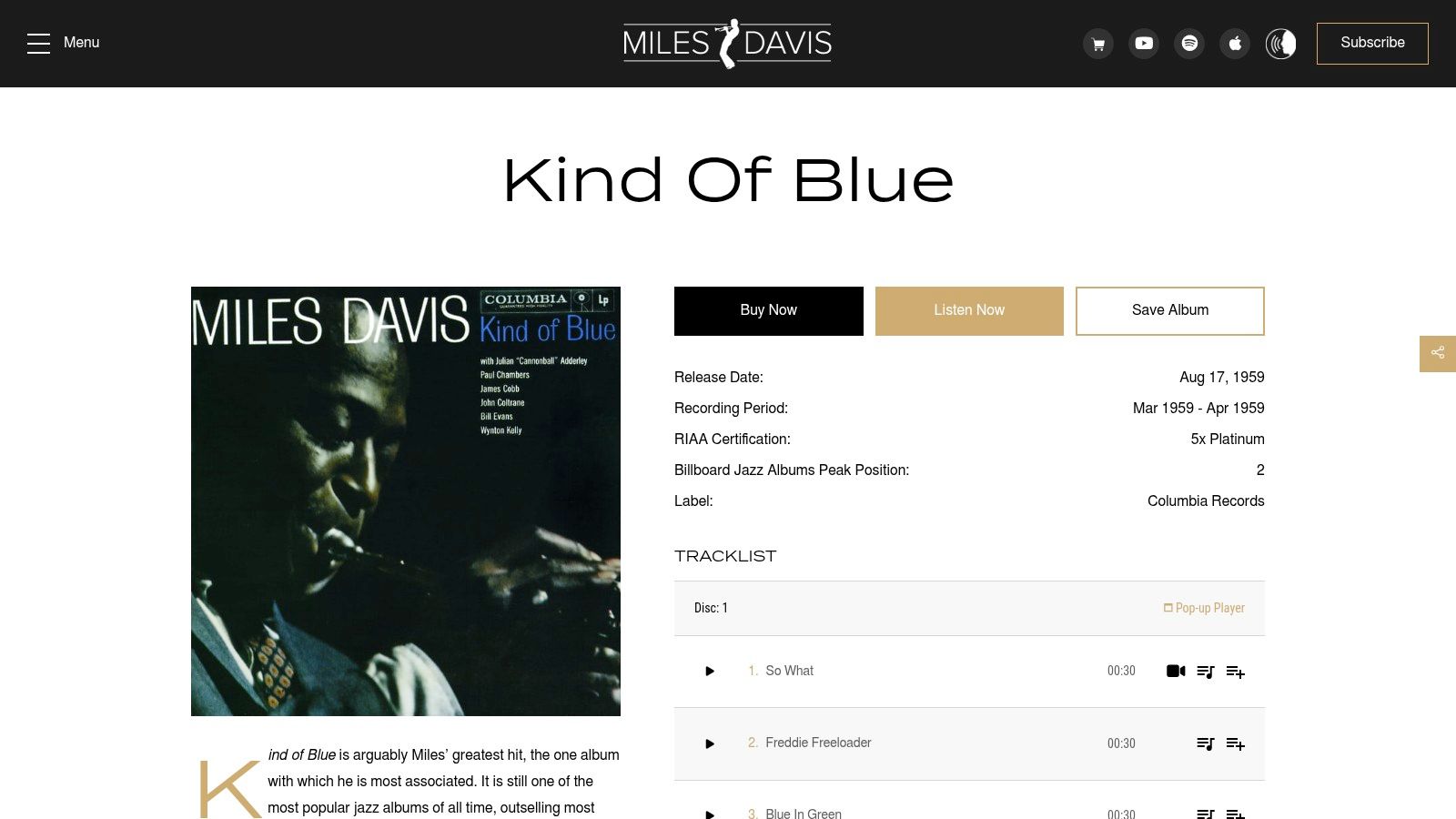
The album became a landmark example of modal practice, a development documented in Frieler's research on the history of jazz improvisation features. That modal approach reduced reliance on rapidly changing chord sequences. You'll hear the result most clearly on “So What” and “All Blues.”
What Works Best
- Approachable depth: It's welcoming for newcomers without sounding simplistic or thin.
- Clear separation: Horns, piano, bass, and drums occupy distinct roles, so you can follow each line.
- Flexible setting: It works for concentration, dinner, or attentive listening without forcing itself forward.
The trade-off is energy. If you want fast, aggressive jazz, this record won't deliver it. Experienced listeners may also find its sound familiar after years of exposure. Preview the tracks through the official Kind of Blue album page, and if you're building your own practice material from a recording, learn how to get instrumentals from a full mix before you try to lift a single part.
Pick Kind of Blue when you want calm with substance, not music that disappears into wallpaper.
2. Time Out, The Dave Brubeck Quartet
Put Time Out on when you want alert, melodic jazz: music with enough pulse for a focused afternoon, yet tidy enough to follow every part. Dave Brubeck leads Paul Desmond on alto saxophone, Eugene Wright on bass, and Joe Morello on drums, and the quartet keeps the arrangements lean so each instrument stays audible.
“Take Five” is the doorway. The album's real value is rhythmic range. Much of it moves outside standard 4/4 swing, using meters such as 5/4 and 9/8 while keeping the tunes memorable. Use it for listening that rewards attention, for practicing counting and phrasing, or for showing a skeptical friend that odd meters can feel relaxed.
Where It Fits
- Focused energy: brighter than Kind of Blue, less forceful than hard bop.
- Musician study: the meters challenge timing without turning abstract.
- Clear quartet roles: piano and saxophone trade lines cleanly over bass and drums.
The limit is grit: listeners chasing blues weight or raw attack should look elsewhere. Replay the hit too often and the deeper album can blur. Check editions through the official Dave Brubeck website, and if the modal language pulls you in, study how the seven modes shape melody and tension.
3. Maiden Voyage, Herbie Hancock
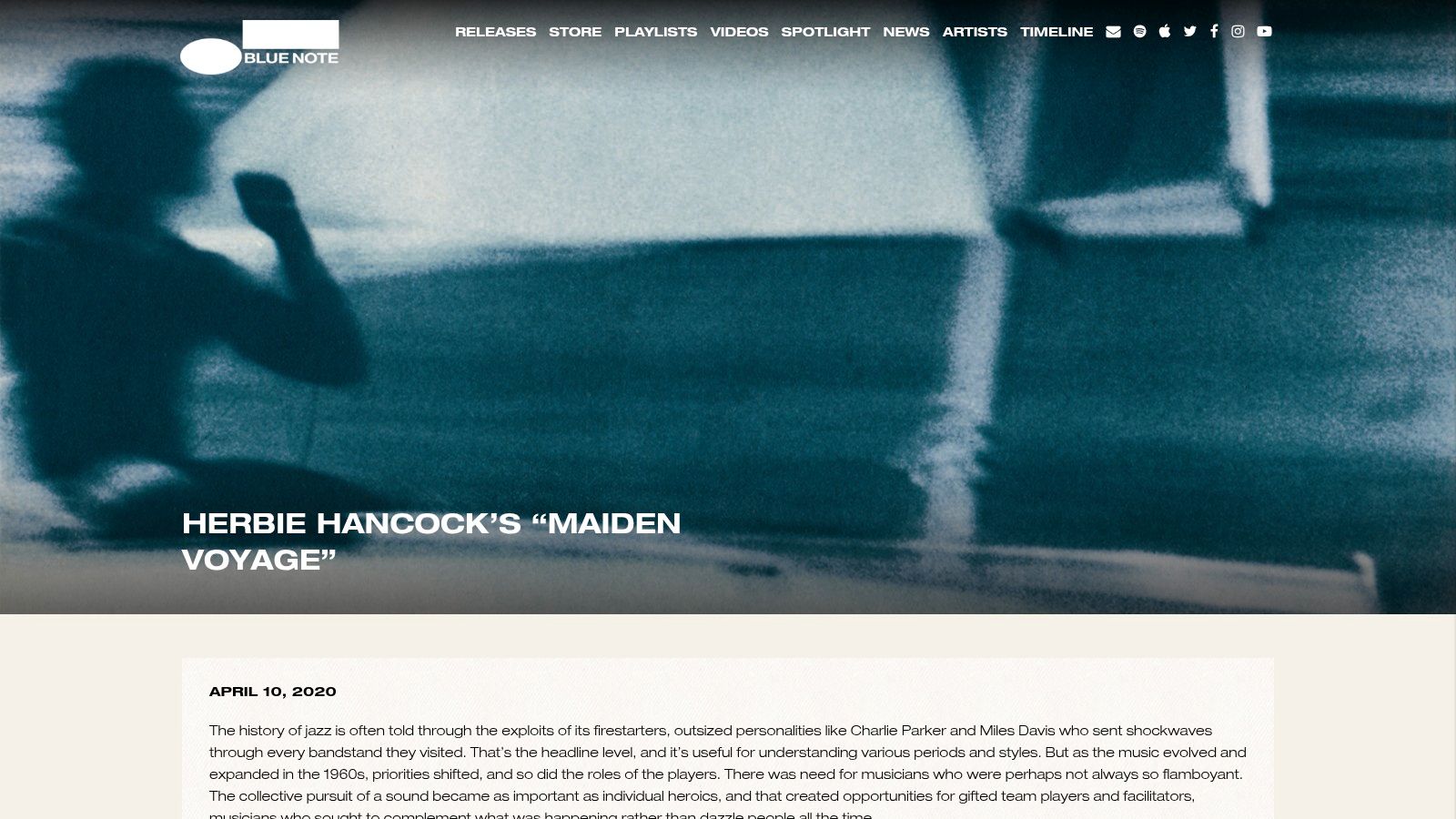
If Kind of Blue works for you but you want a different group sound, move to Maiden Voyage. Herbie Hancock leads a piano-driven quintet with trumpet, saxophone, bass, and drums. The album holds together through a nautical mood, open modal writing, and ensemble playing that moves without sounding hurried.
Play it when you want relaxed listening that still rewards attention. It's a strong choice for reading, evening work, or a quiet room where lyrical music would distract you. The atmosphere comes from harmony, pacing, and tonal color, not from vocals or production effects.
Why It Earns a Place
- Cohesive mood: The pieces feel connected rather than assembled around one hit.
- Ensemble texture: Piano and horns add movement while the rhythm section keeps the surface calm.
- Dual purpose: It supports background listening, then reveals more detail when you sit down and focus.
That restraint is also its limitation. Some listeners will find it too mellow, especially after hearing the force of Coltrane or Art Blakey. It also lacks a crossover track with the immediate familiarity of “Take Five.” Explore editions through Blue Note's spotlight on Maiden Voyage. For creators who want to study one layer at a time, audio source separation explains how individual sounds can be pulled from a mix.
4. Blue Train, John Coltrane
Pick Blue Train when modal calm isn't enough. John Coltrane's tenor saxophone leads a hard-bop session built on strong themes, blues influence, and punchy horn lines. The record drives forward. It suits active listening, a drive where you can give it volume, or any moment when you want jazz that's played without vocals, with physical momentum.
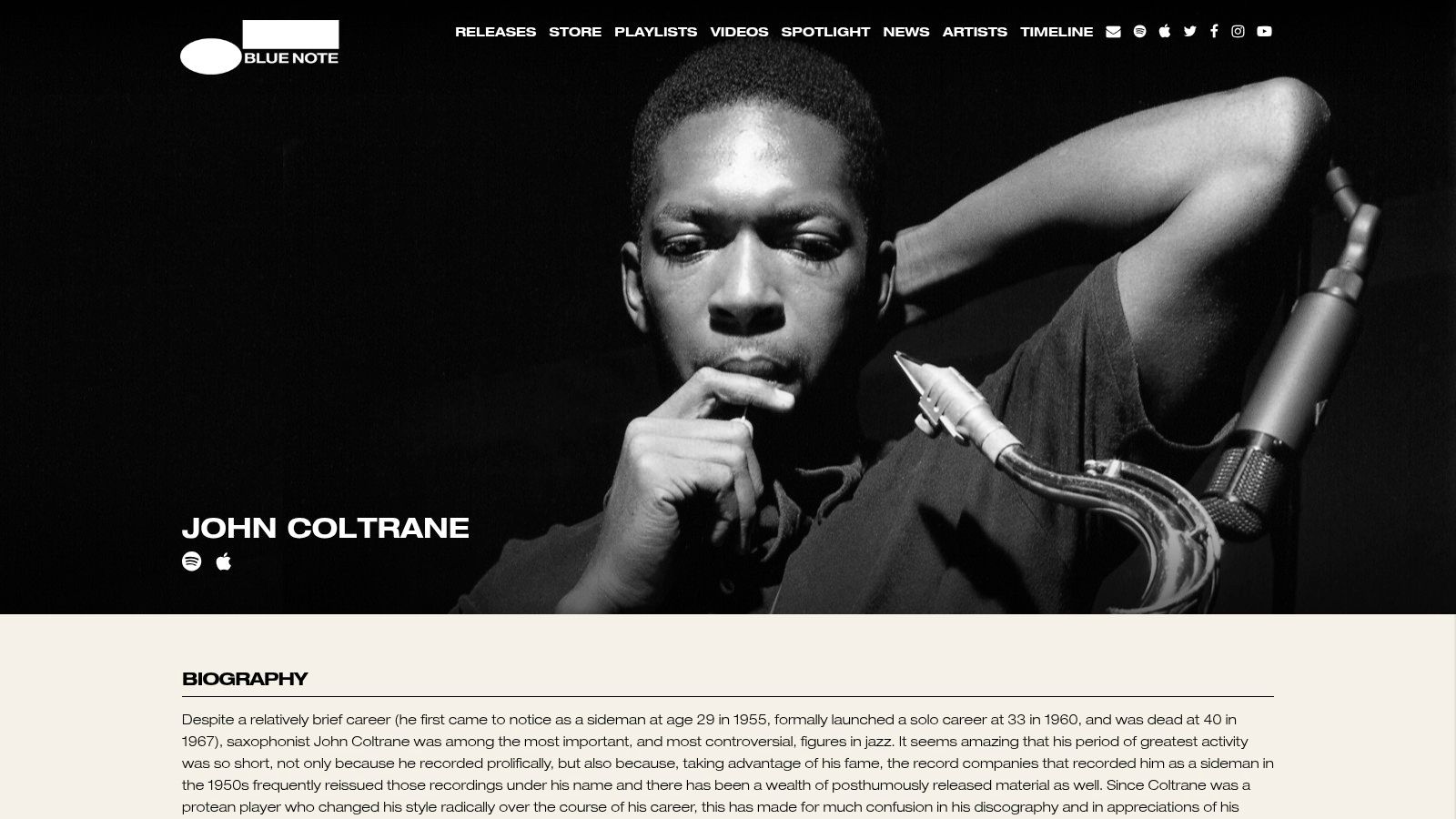
This isn't music for a quiet study session. The horns are assertive, the solos stay busy, and the ensemble arrangements give Coltrane a powerful frame rather than a soft cushion. That's the point. You hear an early, vivid version of his sound inside compositions that remain memorable after the solos end.
Choose It for Energy, Not Subtlety
- Tenor showcase: Coltrane sits at the center, with force and clarity.
- Memorable themes: The written material gives the improvisation a strong point of return.
- Hard-bop contrast: It delivers the drive that Kind of Blue and Maiden Voyage deliberately avoid.
Don't use it as unobtrusive background in a shared workspace. Its intensity will pull attention, and that's either a benefit or a problem depending on your setting. Browse releases and artist information through Blue Note's John Coltrane artist page.
Practical rule: If a record makes you stop typing to follow the solo, save it for active listening and choose a sparser album for work.
5. Sunday at the Village Vanguard, Bill Evans Trio
For intimate interplay, choose Sunday at the Village Vanguard. Bill Evans plays with Scott LaFaro on bass and Paul Motian on drums in a live club setting. The trio doesn't operate with piano in front and everyone else locked into support roles. Bass and drums answer, redirect, and reshape the music as it unfolds.
That makes the album especially valuable for ear training. With only three instruments, you can follow changes in dynamics, timing, and accompaniment without losing the thread. Musicians who want to understand comping and conversational rhythm section playing will get more from this record than from a larger horn-led session.
Listen for the Conversation
- Interactive bass: LaFaro moves beyond simple timekeeping and shapes the direction of the performance.
- Responsive drums: Motian leaves space, then uses small accents to change the emotional temperature.
- Live variation: The club atmosphere preserves the sense that choices are happening in real time.
Research on interactive musical improvisation found that improvised exchanges activated language-related perisylvian regions, including the inferior frontal gyrus and posterior superior temporal gyrus, compared with memorized exchanges, according to the Oxford research record on musical improvisation. That language comparison fits this trio well. You're hearing a conversation, not three separate parts pasted together.
The live-room ambience won't suit listeners who want polished studio sound. Its subtlety may also feel undramatic if you're in the mood for hard bop. Use it for quiet, attentive listening, not for lifting the energy in a busy room.
6. Moanin', Art Blakey and The Jazz Messengers
Choose Moanin' for the most immediate rhythmic hit on this list. Art Blakey's drumming leads The Jazz Messengers through hard bop shaped by blues and gospel influence, strong grooves, and themes you can remember after one listen. Brass and saxophone give the group a full, punchy sound that contrasts sharply with piano-led calm.
This is the record for cooking, gathering people, or resetting your energy after a flat afternoon. It doesn't ask you to decode complex structures before you enjoy it. The groove lands first, then the solos and ensemble details give you reasons to return.
Strengths and Trade-Offs
- Immediate momentum: Blakey's drums push the band with unmistakable force.
- Direct group sound: The horns and rhythm section are easy to distinguish, even for new listeners.
- Accessible hard bop: Strong themes keep the music grounded while the solos stretch out.
Don't play it when you need low-key concentration. Powerful drums and horns can dominate a quiet room, a small apartment, or a shared office. If your goal is sleep or deep reading, choose Evans or Hancock instead. Browse current catalogue releases through the official Blue Note Records site.
Moanin' is not background music at low volume. Give it room, or pick a different record.
7. Jazz Impressions of Japan, Dave Brubeck Quartet
Pick Jazz Impressions of Japan when you like Brubeck's clarity but want a more reflective mood than Time Out delivers. The compositions draw on the quartet's travels in Japan, and the themes come through cleanly on piano, saxophone, bass, and drums. The mood shifts from track to track, yet the arrangements stay readable throughout.
This is the album for a train ride, a slow afternoon, or a room where conversation matters more than the music. Each instrument is easy to isolate by ear, so newer listeners can follow how a quartet shares space. Longtime Brubeck fans get a reminder that his catalogue runs deeper than "Take Five."
Who Should Choose It
- Brubeck listeners: A gentler, travel-inspired companion to his best-known record.
- Melody-first fans: Composed themes carry the record rather than speed or solo display.
- Quiet settings: Reading, working, and low-volume evenings suit its restraint.
The trade-off is familiarity. Nothing here hits as fast as Time Out, and anyone wanting hard-swinging energy should return to Blue Train or Moanin' instead. Treat that restraint as a feature and slot it where calm belongs. Check your streaming catalogue or local record shop for the edition that fits, since pressings vary in sound and packaging.
Comparison of 7 Classic Jazz Albums
Pick by situation first. Start with the energy column, then confirm the listening style fits your room.
| Album | 🔄 Listening Style | ⚡ Energy | ⭐ Key Strength | 💡 Ideal For |
|---|---|---|---|---|
| Kind of Blue, Miles Davis | Spacious, unhurried modal jazz | Low to moderate | Accessible melodies and expressive ensemble interplay | Focused listening or understated background music |
| Time Out, The Dave Brubeck Quartet | Piano-led quartet with unusual meters | Moderate | Memorable tunes and approachable rhythmic variety | Jazz newcomers and listeners curious about rhythm |
| Maiden Voyage, Herbie Hancock | Atmospheric, open modal jazz | Low to moderate | Cohesive mood with nuanced ensemble textures | Relaxed listening that still rewards attention |
| Blue Train, John Coltrane | Blues-rooted, driving hard bop | High | Vivid tenor saxophone and punchy ensemble arrangements | Listeners seeking momentum and energetic solos |
| Sunday at the Village Vanguard, Bill Evans Trio | Intimate live piano-trio interplay | Low to moderate | Subtle, spontaneous interaction among piano, bass, and drums | Attentive listening and quieter settings |
| Moanin', Art Blakey & The Jazz Messengers | Groove-driven, brass-forward hard bop | High | Forceful drumming, memorable themes, and direct energy | Listeners wanting lively, rhythmic jazz with drive |
| Jazz Impressions of Japan, Dave Brubeck Quartet | Reflective, piano-led quartet jazz | Low to moderate | Melodic compositions and clear quartet interplay | Relaxed listening and fans of thoughtful piano-led jazz |
Sunday at the Village Vanguard is the only live recording here, and the quietest. Save it for a room that allows real attention.
Build a Listening Session Around the Right Energy
Stop asking which jazz album is best in the abstract. Ask what you need the music to do for the next hour. For sustained concentration, choose Kind of Blue or Maiden Voyage. Their modal spaciousness, controlled pacing, and clear ensemble roles support work without turning the music into empty ambience. For quiet attention, choose Sunday at the Village Vanguard, where piano, bass, and drums stay exposed enough for you to hear every decision.
For active listening with a rhythmic challenge, choose Time Out or Jazz Impressions of Japan. The first gives you memorable melodies inside unusual meters. The second gives you Brubeck in a more reflective quartet setting. For movement and volume, choose Blue Train or Moanin'. Coltrane gives you driving tenor-led hard bop. Blakey gives you drums, horns, and grooves that demand physical space.
Match the Record to the Task
- Study and writing: Kind of Blue, Maiden Voyage
- Ear training: Sunday at the Village Vanguard, Time Out
- Social energy: Moanin', Blue Train
- Relaxed travel or reading: Jazz Impressions of Japan, Maiden Voyage
That distinction between background utility and active study matters beyond playlist choice. A controlled fMRI study of six professional jazz pianists found that improvisation produced reduced activity in dorsolateral and lateral orbital prefrontal regions alongside focal activation of the medial prefrontal cortex, using a 3-tesla scanner described in the PLOS ONE study of jazz improvisation. The sample was small, so don't overgeneralize it. Use it as a practical reminder that reproducing a learned passage and exploring freely are different modes of work.
Creators can apply the same separation. Use Isolate Audio to isolate a described layer such as “piano melody” or “upright bass” from the remainder of a recording, then test that layer at lower volume, under a new backing track, or beside the original for call-and-response practice. Keep the full ensemble version nearby. Isolation helps you hear detail, but the remainder teaches you timing, phrasing, articulation, and room feel. That's how you move from passive playlist listening toward actual musical understanding.
Isolate a piano voicing, walking bass line, horn solo, or drum groove from your favorite jazz recording by describing it in plain English, then download both the isolated part and the remainder for practice, teaching, or remixing. Visit Isolate Audio to upload a track and build a focused listening session around the exact sound you want to study.